
Tree Root Intrusion in Tyler, TX Sewer Lines: Signs and Solutions
The Most Reliable Local Plumbers in Tyler, TX
October Offer
Slow drain? Stubborn clog? Water refusing to go where it’s supposed to?
It sounds like a job for The Drain League from THE Mink! Call THE Mink Hotline today to schedule and claim your $79 Drain Clearing!
October Offer
Slow drain? Stubborn clog? Water refusing to go where it’s supposed to?
It sounds like a job for The Drain League from THE Mink! Call THE Mink Hotline today to schedule and claim your $79 Drain Clearing!
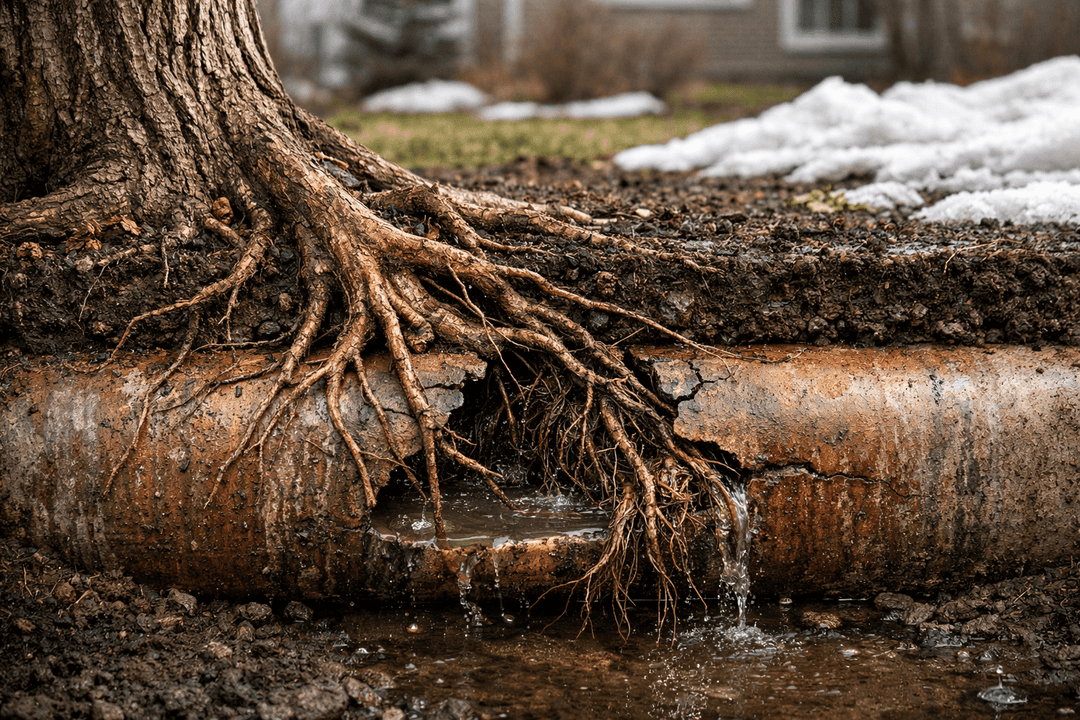
If your drains keep slowing down for no obvious reason, or a toilet gurgles every time you run the washing machine, tree roots might be the reason. It’s one of the most common problems the Tyler drain and sewer experts at THE Mink Plumbing run into around here, and it sneaks up on homeowners because the damage happens several feet underground where nobody’s looking.
Fall is the smart time to get ahead of it, before cooler weather and holiday guests put your plumbing to the test. Here’s what’s going on down there, what to watch for, and how it gets fixed.
Why Tyler Is Tree Root Country
Roots aren’t drawn to your sewer line by accident. They’re chasing the steady supply of water, warmth, and nutrients flowing through it, and Tyler gives them plenty of ways in.
A few things stack the deck here:
- Mature trees everywhere. Loblolly and shortleaf pines, big oaks, and sweetgums fill established neighborhoods like the Azalea District, Rose District, and Hollytree. A single mature tree can send feeder roots dozens of feet past its canopy.
- Shifting clay soil. East Texas clay swells when it’s wet and shrinks in a drought. That constant movement pulls pipe joints apart and opens hairline cracks that roots slip right into.
- Older pipe materials. Homes built before the 1980s often have clay tile or cast iron laterals. Their joints loosen and corrode over the decades, which is exactly what a thirsty root is looking for.
Put those three together and you’ve got a line that roots can find, enter, and slowly choke.
Signs Roots Have Found Your Sewer Line
Root intrusion almost always warns you before it turns into a full backup. The trouble is that the early signs are easy to write off as a one-off clog. Watch for these:
- Slow drains in more than one fixture, especially tubs and toilets on the lowest floor
- A gurgling toilet, or water bubbling up when another drain runs
- A faint sewage smell in the yard or near floor drains
- Patches of grass that are suddenly greener, spongier, or soggier than the rest
- Backups that keep coming back a few weeks after you clear them
That last one is the big tell. If you snake a line and the problem returns like clockwork, you’re not dealing with hair and grease. Something’s growing back.
How the Roots Get Cleared and the Damage Gets Fixed
The right fix depends on how far things have gone, which is why the first step is always to see what’s actually happening inside the pipe.
A camera inspection is how we do that. Running a small video camera down the main sewer line shows exactly where the roots are, how bad the intrusion is, and whether the pipe itself is cracked or still solid. No guesswork, no digging up the yard to find out.
From there, the options usually break down like this:
- Clearing the roots. For a line that’s still structurally sound, mechanical cutting or high-pressure jetting scours the roots out and restores full flow. This is the heart of professional sewer cleaning, and it’s a world apart from a hardware-store auger.
- Relining the pipe. If the pipe is cracked but not collapsed, trenchless sewer lining creates a new, seamless pipe inside the old one. It seals off the entry points roots used, without tearing up your lawn or driveway.
- Repairing or replacing the line. When a section is crushed or badly offset, sewer repair and replacement is the lasting fix, swapping the failing clay or cast iron for modern pipe that roots have a much harder time breaching.
How to Keep Roots From Coming Back
Clearing the line buys you relief, but roots will find their way back to an open pipe if you let them. A little upkeep goes a long way:
- Know where your line runs, and avoid planting large trees near it. Keep big species roughly as far away as their mature height.
- Use a foaming root killer once or twice a year to slow regrowth inside the pipe.
- Be careful what you flush. Wipes labeled flushable, paper towels, and grease give roots something to grab onto and speed up blockages.
- Schedule a routine drain cleaning heading into fall, especially if you’ve had root trouble before. Catching new growth early is far cheaper than an emergency dig in December.
If you’ve got mature trees within about 30 feet of your sewer line, a camera inspection every year or two is worth it. Roots grow slowly, and a quick look keeps small problems from becoming expensive ones.
When a Backup Becomes an Emergency
Sometimes roots block a line completely before you’ve had a chance to act. If raw sewage is backing up into tubs, showers, or floor drains, stop using water and call for emergency plumbing help right away. A full backup can flood your home and create a real health hazard, and it won’t clear on its own.
Get Ahead of It This Fall
Tree roots are patient, but they’re also predictable, which means this is a problem you can stay in front of. If your drains have been acting up or you just want peace of mind before the busy season, the crew at THE Mink Plumbing has been keeping Tyler’s sewer lines flowing for more than 60 years.
Reach out to schedule an appointment, and we’ll take a look before a slow drain turns into a Saturday-night mess.
Serving the Tyler, TX Area
 All Service Areas